Text-to-Image
Interior Design
通用
Thickness of the Stone Tub: Why Water Cools Slowly
Prompt
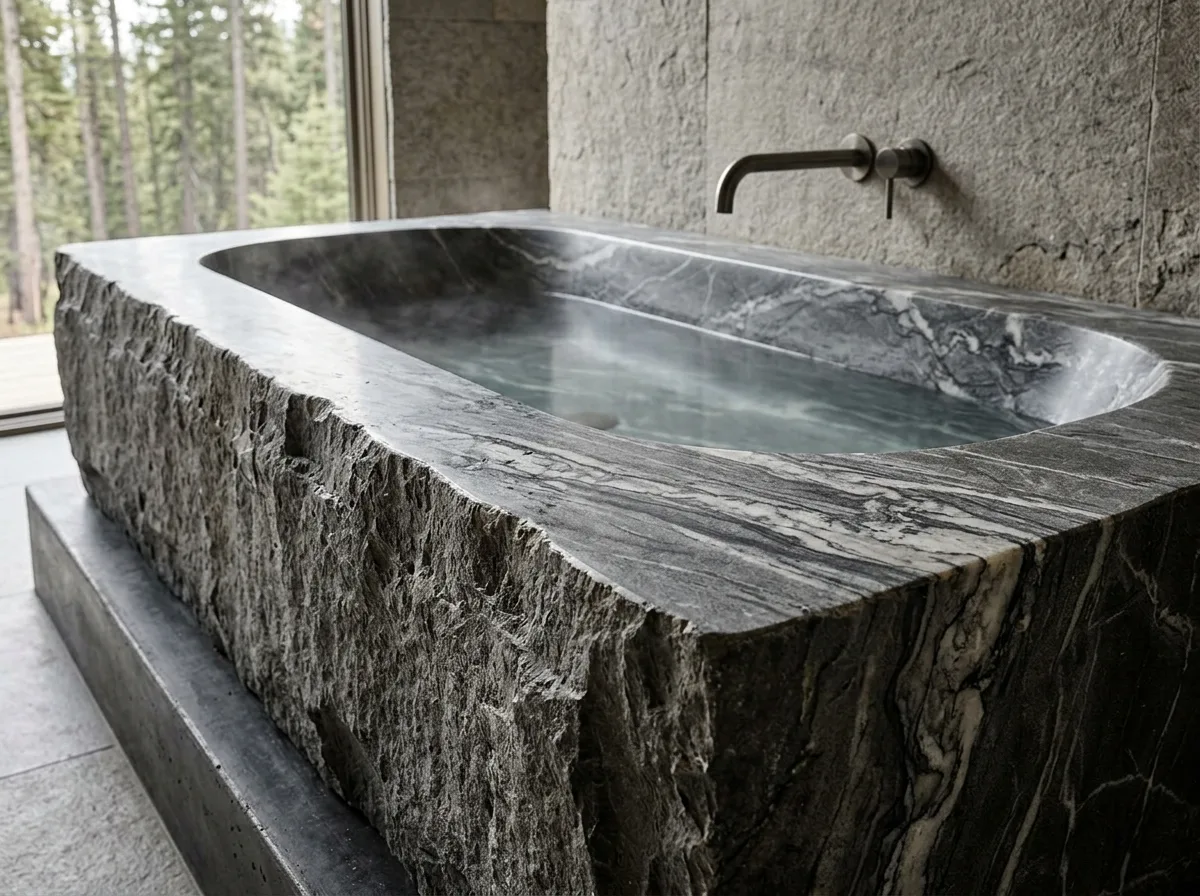
A bathtub carved from a single block of stone. It is a solid mass, with the exterior retaining a rough chiseled finish or precisely right-angled, while the interior is polished to extreme smoothness; being from the same stone, the grain flows continuously from the outer wall, across the rim, and into the interior. The tub body is extremely heavy, with independent structural reinforcement underneath. The thickness of the stone allows the water temperature to drop slowly—this is the most practical difference between a solid stone tub and an acrylic tub. The overflow and drainage are hidden at the bottom of the tub, with no visible hardware on the surface. The faucet extends independently from the wall or floor. The foreground of the image shows the thickness of the stone and the continuity of its grain. Avoid: using thin slabs to create a false solid appearance, making the interior and exterior grain discontinuous, adding visible overflow covers and hardware, making the tub body thin and light.
Translated from Chinese by AI.
Show the original prompt
一個由整塊石材挖鑿而成的浴缸。它是一個實心的量體,外側保留粗獷的鑿面或做成精確的直角,內側則磨到極為光滑;因為是同一塊石頭,紋理從外壁穿過缸緣連續進入內部。缸體極重,底下有獨立的結構補強。石材的厚度讓水溫下降得慢——這是實心石缸相對於壓克力缸最實際的差別。溢流口與排水是從缸底以隱藏的方式做,表面看不到任何五金。龍頭從牆面或地面獨立伸出。畫面近景可以看出石材的厚度與紋理的連續。避免:使用薄板貼合做出的假實心、讓內外的紋理不連續、加入可見的溢流蓋與五金、把缸體做得輕薄。